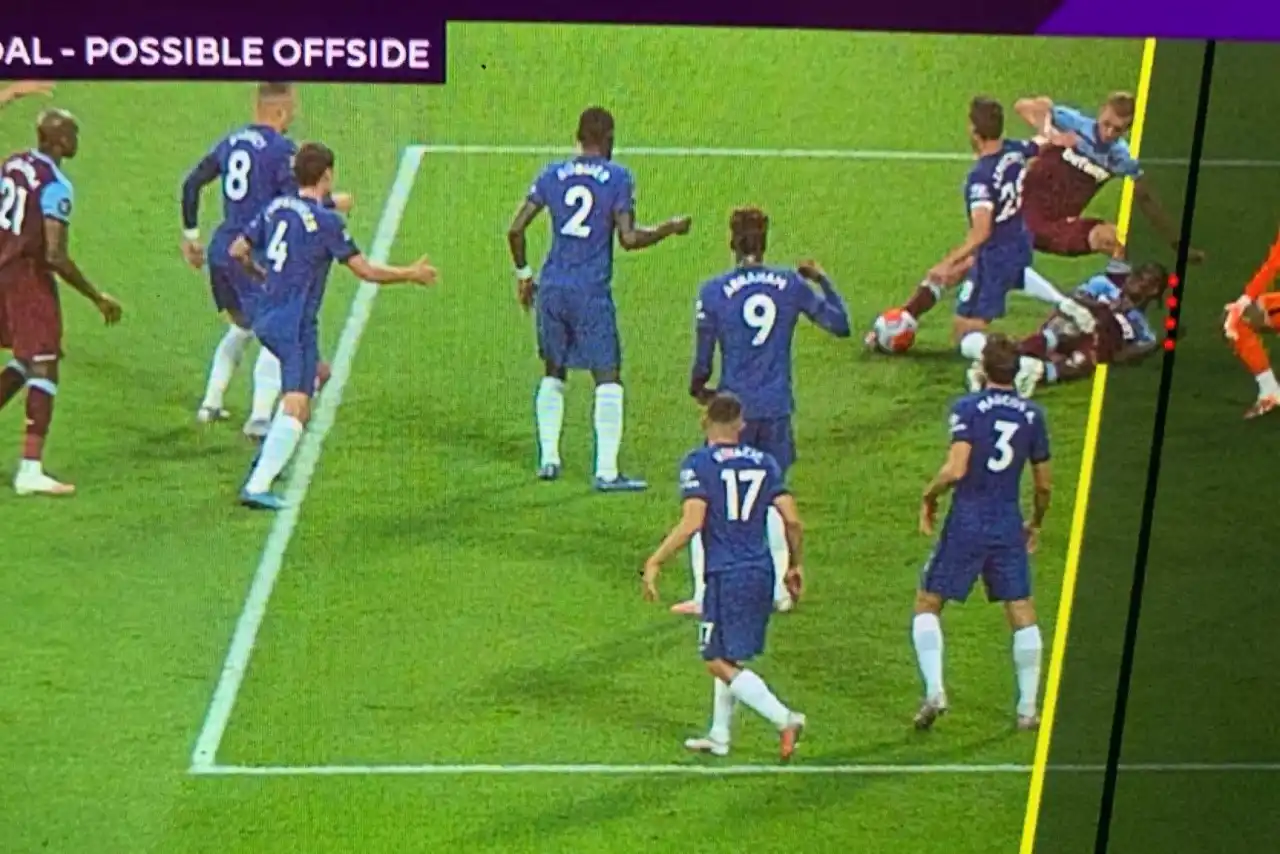
The incident stemmed from West Ham’s early dominance, where they raced into a 2-0 lead at half-time courtesy of Jarrod Bowen (around the 6th minute, exploiting a Robert Sanchez error) and Crysencio Summerville (35th). However, the real flashpoint for debate wasn’t a disallowed goal but one that stood after prolonged scrutiny—likely tied to Chelsea’s comeback phase or a West Ham effort that survived checks.
Reports and fan reactions highlight a lengthy VAR delay during a key moment, where players from both sides stood waiting awkwardly on the pitch, momentum stalled, and confusion reigned among the Stamford Bridge crowd. While the match report details Chelsea’s historic second-half turnaround—substitutes João Pedro (56′) and Marc Cucurella (69′) leveling it before Enzo Fernández’s 90+2′ winner sealed the comeback—the VAR involvement created frustration. In one instance, a goal (possibly West Ham-related or during the buildup to Chelsea’s equalizer) underwent extended review for potential offside, foul, or contact, with the on-field decision ultimately confirmed. The Premier League issued explanations in similar past cases (e.g., no contact by a player like Guiu in a prior delay), but here, the drawn-out process ruined the flow, turning what should have been fluid football into a stop-start spectacle.
Chelsea supporters vented heavily online and in post-match discussions, branding the handling “inconsistent” and a prime example of VAR eroding trust. Many argued the decision felt wrong—perhaps overlooking a subtle foul, offside element, or interference that “clear and obvious” protocols should have overturned. The referee (Anthony Taylor) and VAR team faced heavy criticism for the delay and outcome, with growing calls for officials to face questioning or sanctions from PGMOL. Fans echoed a familiar refrain: if VAR exists to correct glaring errors, why does it so often amplify controversies, create bigger debates, and disrupt the game’s rhythm?
This episode fits a broader pattern in recent fixtures. The match itself descended into chaos late on, with a mass brawl sparked by Adama Traoré’s physical clash with Marc Cucurella, escalating when Jean-Clair Todibo grabbed João Pedro by the throat—leading to a straight red after a lengthy VAR review and pitchside monitor check. Taylor announced: “After review, West Ham number 25 grabs Chelsea number 20 around the throat in a violent manner. Therefore my final decision is a red card, violent conduct.” While that call was decisive, the earlier goal-related delay fueled narratives of inconsistency—why quick on some reviews, agonizingly slow on others?
Pundits and ex-refs have weighed in on similar “optical illusions” or subjective calls in Chelsea-West Ham ties, but here the focus remains on how VAR’s interventions (or lack of decisive ones) robbed the game of spontaneity. Players paused celebrations or play, fans sat in bewildered silence, and the emotional highs of a thriller were overshadowed by officiating drama. Chelsea’s remarkable recovery from 2-0 down made club history, surging them toward top-four contention, while West Ham’s collapse left them deeper in relegation trouble.
Yet the lingering bitterness for many (especially neutrals and rival fans) centers on VAR’s role: meant as a safety net, it increasingly feels like a disruptor. Week after week, trust frays further amid demands for clearer guidelines, faster processes, or even audio transparency. Until addressed, these moments will continue to dominate headlines over the football itself.
