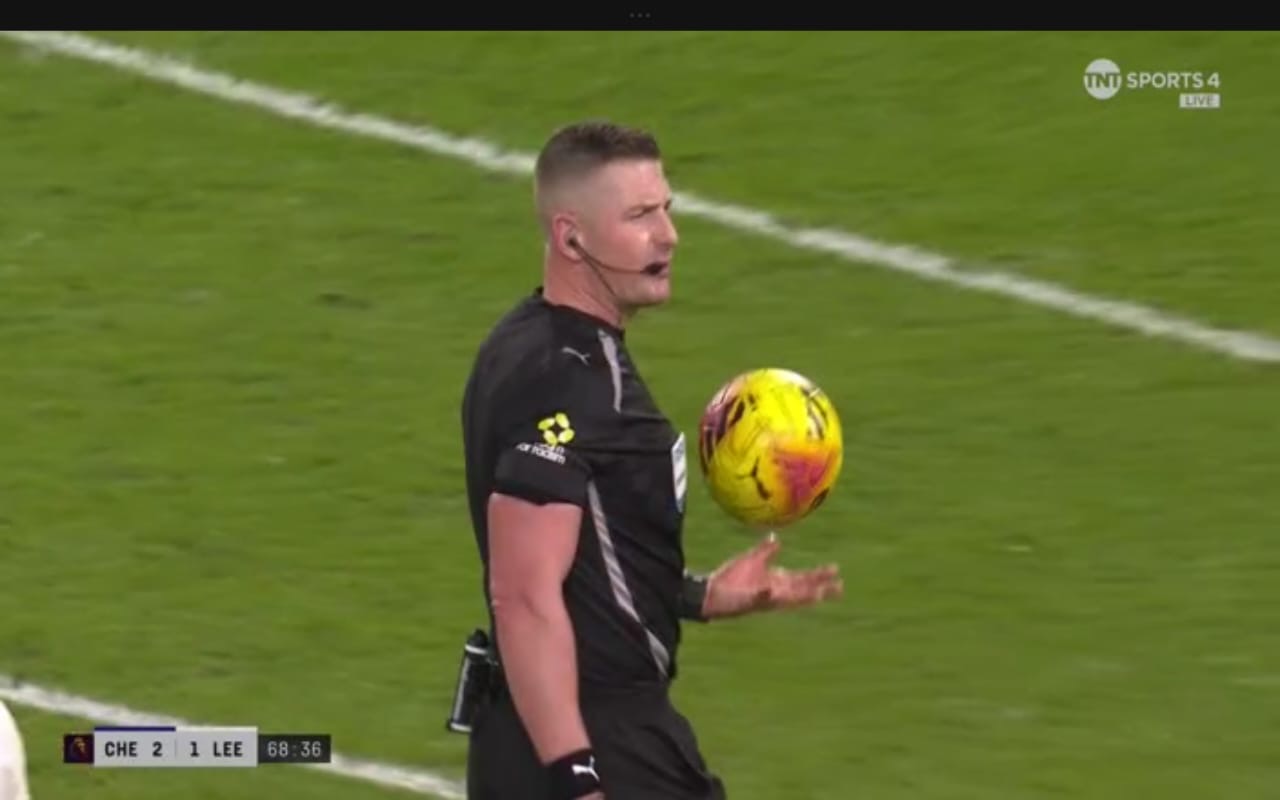
Many fans have taken to social media to voice their anger, accusing him of inconsistent officiating that favored Leeds and contributed to the Blues squandering a two-goal lead.
From match reports and real-time commentary, the game was physical and stop-start, with multiple bookings handed out early. Chelsea’s Malo Gusto received a yellow card just minutes in for a challenge on Gabriel Gudmundsson, setting a feisty tone. Other Chelsea players, including Moises Caicedo, picked up cautions, while Leeds players like Gudmundsson, Sebastiaan Bornauw, and others were also booked—but fans felt Jones was quicker to punish Chelsea fouls than similar or worse ones from Leeds. Complaints included ignored challenges on Chelsea attackers, such as potential fouls on players like Estevao or others during transitions, while Leeds were allowed to “foul Chelsea out of the game” without equivalent sanctions in some eyes.
One specific incident that has fueled outrage is a disputed throw-in decision. Chelsea fans claimed the ball clearly went out off a Leeds player, warranting a Chelsea throw-in, but Jones (or his assistants) reversed it and awarded the throw to Leeds instead. While no major outlet has highlighted this as a game-changing error or VAR intervention (VAR was John Brooks, but no on-field reversal was noted for this), it became a flashpoint in fan discussions as emblematic of perceived bias. Social media posts described it as “shocking” and part of a pattern where “any slight fall from a Leeds player” drew a whistle, while Chelsea’s appeals were dismissed.
Broader fan sentiment on platforms like X echoed this:
- Accusations of Jones being “biased,” “pathetic,” or a “Chelsea sh*te” referee who handed out yellows to Chelsea players disproportionately.
- Frustration over “wasted advantages” and failure to book Leeds players for “silly tackles.”
- Some called him the “most biased ref in England” or questioned why he seemed eager to make Chelsea players the “main character” with cards.
However, official reports don’t portray Jones’ performance as overwhelmingly one-sided or scandalous. The game saw bookings for both sides (e.g., Leeds’ Gudmundsson at 19’, Bornauw at 22’, and later ones), and the draw stemmed more from defensive lapses—Chelsea conceding after leading through Joao Pedro and a Cole Palmer penalty—than refereeing alone. A controversial moment did arise around a Leeds goal (or equalizer), where VAR checked for handball in the build-up (involving Jayden Bogle), but it was upheld as no clear offence, allowing the goal to stand. This drew some Chelsea ire but was officially confirmed as correct.
Robert Jones has a history of polarizing decisions in Chelsea matches. In prior seasons, he’s officiated high-profile games involving the Blues (e.g., controversies in Chelsea vs Fulham or Bournemouth clashes, often involving VAR interventions that frustrated opposing managers like Marco Silva). Chelsea fans have long voiced concerns about refereeing consistency, especially in a season where disciplinary records and dropped points have been scrutinized. While no post-match statements from Chelsea players, staff, or the club have directly condemned Jones (unlike some opposition reactions in other games), the fanbase’s fury is clear and growing online.
Ultimately, the result leaves Chelsea ruing missed chances to secure a win that could have boosted their push for European spots, while Leeds earned a valuable point through resilience. Whether Jones’ calls were truly biased or simply part of a tightly contested, card-heavy affair remains subjective—but for many Chelsea supporters right now, he’s firmly in the crosshairs as an “enemy.” The PGMOL may face calls for review if more clips surface, but as of now, it’s standard post-match venting rather than a full-blown crisis.
