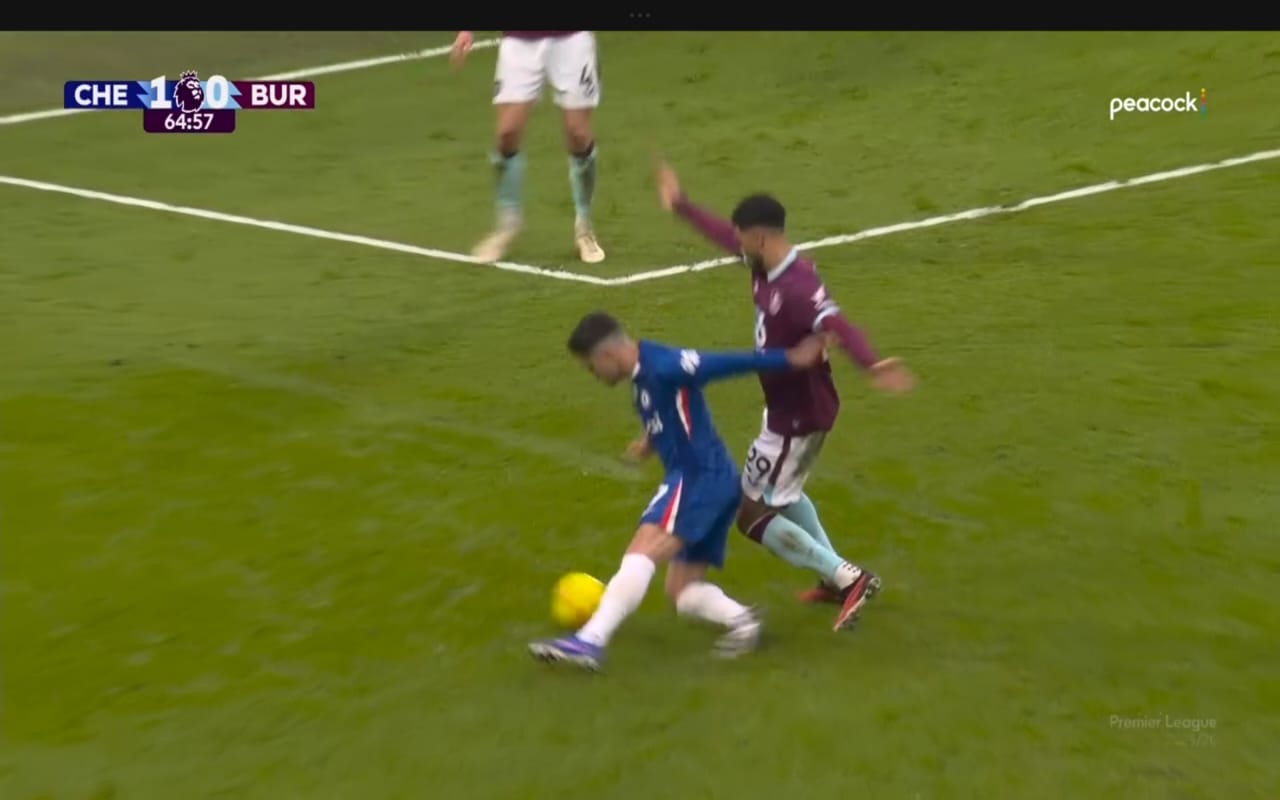
The incident that sparked the latest wave of outrage occurred in the 65th minute, with Chelsea still leading 1-0 courtesy of João Pedro‘s fourth-minute opener (assisted by Pedro Neto). Neto, fresh off a strong performance and showing his trademark pace, received a clever back-heel from João Pedro inside the box. As he shaped to shoot or drive forward, Burnley defender Josh Laurent (or a combination challenge involving Bashir Humphreys in close proximity) appeared to make high, dangerous contact—clipping Neto’s ankle or lower leg with studs up in a lunging tackle that sent the Portuguese winger crashing to the turf in visible distress.
Neto stayed down briefly, holding his ankle, while Chelsea players—including captain Reece James—immediately appealed for a penalty and a potential card. Referee Smith waved play on emphatically, signaling no foul, and VAR (led by Michael Salisbury) reviewed the incident but opted not to intervene, deeming it not a “clear and obvious” error under current protocols. The non-call allowed Burnley to clear their lines and regain composure during a period when Chelsea were pushing for a second goal.
Fans online erupted, labeling it a “deadly foul” due to the high boot and potential for serious injury—echoing concerns about player safety in the modern game. Clips circulated rapidly, with slow-motion replays highlighting the studs-first nature of the challenge and the lack of any attempt to play the ball cleanly. Many Chelsea supporters branded it “another robbery,” pointing to a pattern in matches against Burnley where key decisions seem to favor the visitors or go unpunished.
This latest controversy built on earlier flashpoints in the same game: the disputed eight-second corner awarded to Burnley in the 7th minute (no countdown shown despite the new rule), marginal fouls disrupting Chelsea counters, Wesley Fofana’s 72nd-minute red card (second yellow for a challenge on James Ward-Prowse), and post-match frustrations from players like Robert Sánchez and Reece James. The non-penalty on Neto felt like the tipping point for many, amplifying claims of inconsistent officiating and poor protection for attackers.
Post-match analysis amplified the anger. Pundits noted the recklessness: one ex-referee remarked that while real-time views can be tricky, the high contact and follow-through warranted at least a free-kick or penalty review, especially given injury risk. Chelsea’s camp stayed relatively measured—manager Liam Rosenior focused on defensive lapses for Zian Flemming‘s 93rd-minute equalizer (a powerful header from a James Ward-Prowse corner after Fofana’s dismissal shifted momentum)—but acknowledged the game’s “frustrating” elements.
Burnley, battling relegation and now eight points from safety per reports, celebrated the hard-earned point as a testament to resilience. Their late push exploited Chelsea’s ten-man disadvantage, turning a likely defeat into a morale-boosting draw.
For Chelsea fans, however, the narrative remains one of repeated injustice against Burnley. Social media flooded with hashtags like #AnotherRobbery, #PenaltyNotGiven, and calls for better refereeing standards. The non-call on Neto’s challenge—deemed by many as blatant and dangerous—has fueled broader debates about VAR’s role, referee bravery in big moments, and why such incidents keep “slipping through” without repercussions.
Chelsea drop valuable home points in their top-four chase, now vulnerable after another lead blown at Stamford Bridge. The result stings, but the officiating controversies ensure this match will be dissected long after the final whistle. When a potentially game-changing foul inside the box goes unpunished, the cry of “robbery” feels all too familiar—and all too justified to those in blue.
