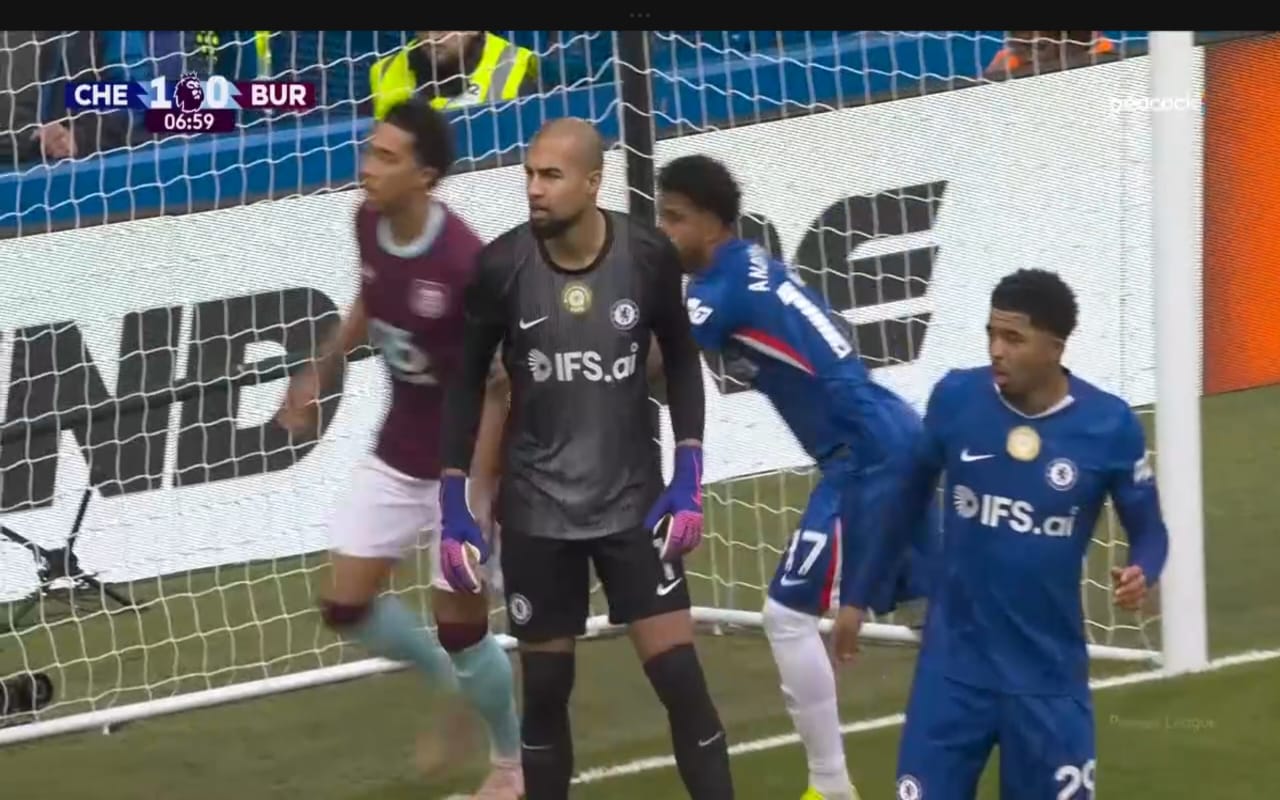
Chelsea fans are once more left raging over refereeing decisions, this time centered on an early incident that echoed the debates from earlier in the season. In the 7th minute, with the Blues already leading through João Pedro‘s fourth-minute opener (assisted by Pedro Neto), goalkeeper Robert Sánchez collected a floated cross from Burnley’s right flank. He went to ground to gather the ball amid pressure from Zian Flemming and a couple of Clarets forwards, shielded it briefly, then rose to his feet looking to launch a quick counter.
Referee Lewis Smith—the same official who awarded the contentious corner in the prior fixture referenced by pundits—raised his arm almost immediately and pointed to the corner flag. The decision sparked instant fury from the home supporters and the Chelsea technical area. Sánchez had barely been in possession for more than a handful of seconds: frame-by-frame breakdowns later showed control established around the 6:57 mark on the match clock, with the ball released (via a throw) by approximately 7:04—equating to roughly seven seconds at most, and arguably less depending on when “clear control” was deemed to start under the rule.
The eight-second rule, introduced at the start of the 2025/26 campaign by the IFAB and adopted league-wide, replaced the largely ignored six-second guideline. Goalkeepers now have eight seconds from gaining control to release the ball into play, with referees required to raise a hand and visibly count down the final five seconds as a clear warning. Breaching the limit awards a corner to the opposition, aiming to crack down on deliberate time-wasting without the old indirect free-kick’s ambiguity.
Yet in this instance, no countdown was visibly initiated. Smith awarded the corner without apparent hesitation or warning, leaving viewers and former players baffled. Burnley capitalized on the set-piece, though the delivery was cleared. The game continued with Chelsea looking comfortable on paper—until Wesley Fofana received a second yellow card in the 72nd minute for a foul, reducing the hosts to ten men. Burnley pushed hard in the closing stages, and Zian Flemming powered home a header from a James Ward-Prowse corner in the third minute of added time to snatch a dramatic equalizer.
Ashley Cole, the Chelsea icon and now a prominent pundit, wasted no time in dissecting the early flashpoint post-match. Appearing on Sky Sports’ analysis show, the former left-back pulled up multiple camera angles on the monitor.
“Look, I’ve timed it three times now—different feeds, slow motion,” Cole stated firmly. “Sánchez secures the ball cleanly at 6:57. He’s protecting it, yes, but he’s upright and ready to distribute by 7:04. That’s seven seconds maximum. The rule gives eight, and referees are meant to show the countdown if it’s getting close. Here? Nothing. No hand up, no warning—just straight corner. It’s the same ref as before, and it feels like the same mistake. This law was brought in to speed things up, not to guess and punish keepers unfairly after good saves.”
Cole’s comments ignited social media once more. Chelsea supporters shared clips with overlaid timers, many clocking the hold at 6-7 seconds. Neutral fans pointed out the inconsistency: in other matches this season, keepers have held longer without sanction when no countdown was shown. Burnley’s camp argued Sánchez delayed unnecessarily by staying down, but even they acknowledged the lack of visible process made the call look rushed.
The incident overshadowed what had been a promising start for Chelsea under their current setup. João Pedro’s early strike showcased their attacking intent, and despite the red card, they defended stoutly until the dying moments. Burnley, battling at the foot of the table (now eight points from safety per reports), celebrated the point as a lifeline, with Flemming’s goal earning praise for resilience.
Pundits across platforms weighed in. Ex-referee Dermot Gallagher, on another broadcast, remarked: “The spirit of the eight-second rule is about blatant time-wasting, not natural pauses after a save. If the ref believes delay is occurring, the countdown must be clear—that’s in the guidance. Skipping it straight to a corner here looks like over-eagerness, especially so early when the game’s rhythm is just settling.”
As the dust settles on this Matchweek 27 clash, the eight-second rule continues to divide opinion. Implemented to inject pace, its application remains patchy, fueling debates about referee training and consistency. Chelsea drop points at home yet again, sitting in the top-six mix but ruing what could have been a routine win. For Burnley, it’s a morale-boosting result in their survival fight.
Ashley Cole summed it up bluntly: “I’m not referee-bashing weekly, but when a new law is this straightforward and it’s botched in plain sight, it has to be called out. Chelsea fought with ten men and still nearly held on—imagine if that early momentum wasn’t disrupted by a questionable call.”
The Premier League’s push for faster play faces its latest test. With more big games ahead, officials know scrutiny will only intensify if similar controversies arise. Today’s match at Stamford Bridge served as a stark case study: good intentions in the rulebook mean little without precise, consistent execution on the pitch.
