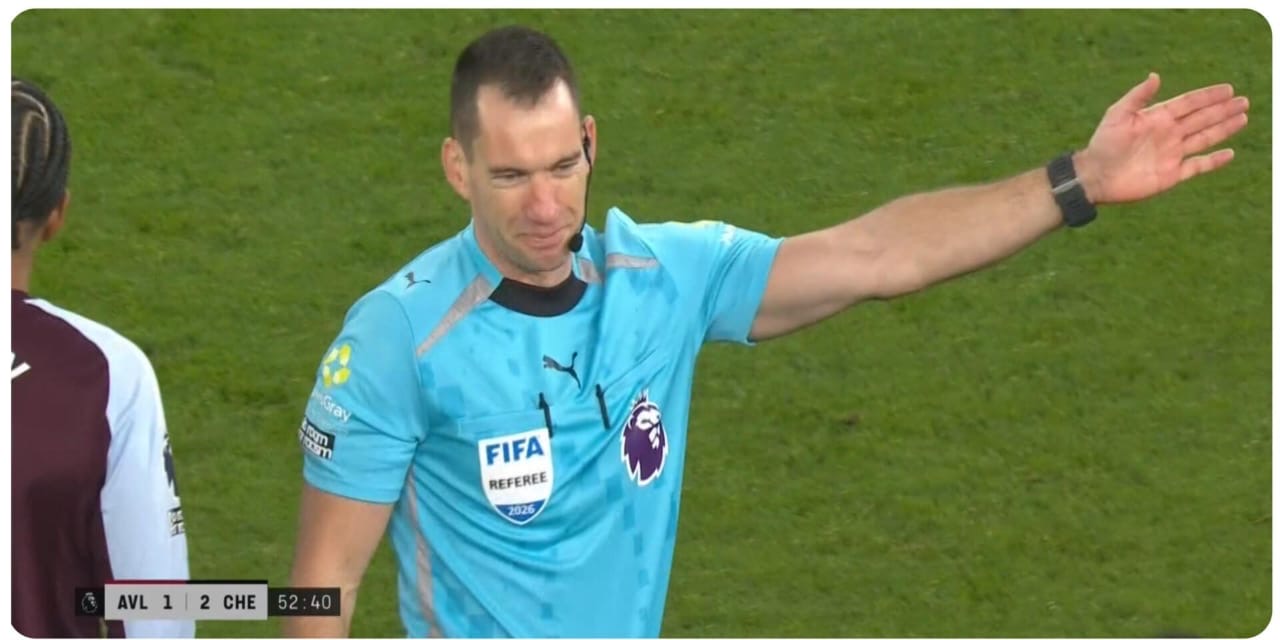
Chelsea emerged victorious with a convincing 4-1 scoreline, thanks to a standout performance from Joao Pedro, who netted a hat-trick, alongside contributions from others like Cole Palmer. However, post-match discussions have centered not on the final result but on an early officiating error that has prompted rare apologies from both the referee and VAR officials.
The incident occurred in the opening stages of the game when Aston Villa appeared to take an early lead. A well-worked move saw the ball played forward, and a Villa attacker finished clinically past the Chelsea goalkeeper. The goal was initially awarded by on-field referee Jarred Gillett, sparking wild celebrations among the home fans at Villa Park. Replays, however, quickly suggested the scorer—or a key player in the build-up—might have been in an offside position.
Crucially, according to emerging reports and statements, the VAR team failed to properly intervene or conduct a thorough check at the time. The goal stood, and play continued with Villa holding a 1-0 advantage. This early strike shifted the momentum, forcing Chelsea to chase the game and altering the tactical approach for both sides in what became a pulsating encounter. Chelsea gradually fought back, equalizing before half-time through a tight offside call that went in their favor (with Joao Pedro staying onside by millimeters), and then pulling away in the second half with clinical counter-attacks.
Chelsea ultimately ran out 4-1 winners, with goals from Joao Pedro (including one just before the break that was scrutinized by semi-automated offside technology and allowed) and Cole Palmer sealing the deal. Aston Villa had a later effort from Ollie Watkins ruled out for offside after VAR intervention—a call that was tight but upheld—highlighting the inconsistency that frustrated both sets of supporters.
In the hours following the final whistle, the controversy escalated when it was confirmed that the early Villa goal was indeed offside. Post-match reviews, including lines drawn by officials, showed the infringement clearly. Sources close to the matter indicate that the referee and members of the VAR team reached out privately to Chelsea’s management and expressed regret over the handling of the decision. The apology acknowledged that VAR was not adequately involved in scrutinizing the incident in real time, allowing an incorrect goal to stand and potentially changing the entire flow and psychology of the match.
Chelsea supporters have been vocal in their fury, arguing that the error handed Villa an undeserved psychological boost early on. Many Blues fans took to social media to point out how the “pure offside” goal disrupted Chelsea’s rhythm and forced them into a more cautious approach initially. “This changed everything,” one prominent Chelsea supporter posted online. “We had to fight back from a deficit that shouldn’t have existed. How many points have been lost this season due to these mistakes?”
The incident has reignited broader debates about consistency, accountability, and the reliability of VAR in the Premier League. Critics argue that while technology was introduced to eliminate clear errors, human oversight—or lack thereof—continues to create injustices. Pundits have called for greater transparency, such as immediate explanations or audio releases in high-profile cases, similar to those seen in other leagues. Questions are also being raised about why VAR did not flag the offside promptly, especially given the use of semi-automated systems designed to make such calls quicker and more accurate.
This is not the first time officials have issued apologies after a match. Previous seasons have seen the PGMOL (Professional Game Match Officials Limited) acknowledge errors in high-stakes games, often leading to referee reassignments or reviews. Chelsea, in particular, have been involved in several VAR flashpoints recently, with fans feeling decisions often swing against them—though in this case, the apology favors the Blues.
Aston Villa’s perspective adds another layer: while they lost convincingly, some supporters believe the early goal could have altered the contest’s trajectory, potentially keeping them competitive longer against a rampant Chelsea side. Unai Emery’s team fought hard but were undone by defensive lapses and Chelsea’s clinical finishing.
Ultimately, the result stands: Chelsea 4-1 Aston Villa. Yet the lingering shadow of the officiating mistake ensures this fixture will be remembered as much for controversy as for the quality on display. Another apology. Another wave of frustration from fans. And yet more calls for reform in how the game polices itself. Football moves fast, but these errors leave lasting scars on the sport’s credibility. As the Premier League season progresses, all eyes will be on whether lessons are truly learned—or if this cycle of controversy simply repeats itself.
